
Barolo for lunch #119
Fancy wines to start and end a dinner
Hi friends! Another edition of Barolo for lunch, delivered straight to your inbox. This weeks temporary assortment had a couple of nice bottles in store, including a couple of interesting Barolos, but for the special picks I chose two bottles to kick-off and end a dinner in style. Cheers! 🍷
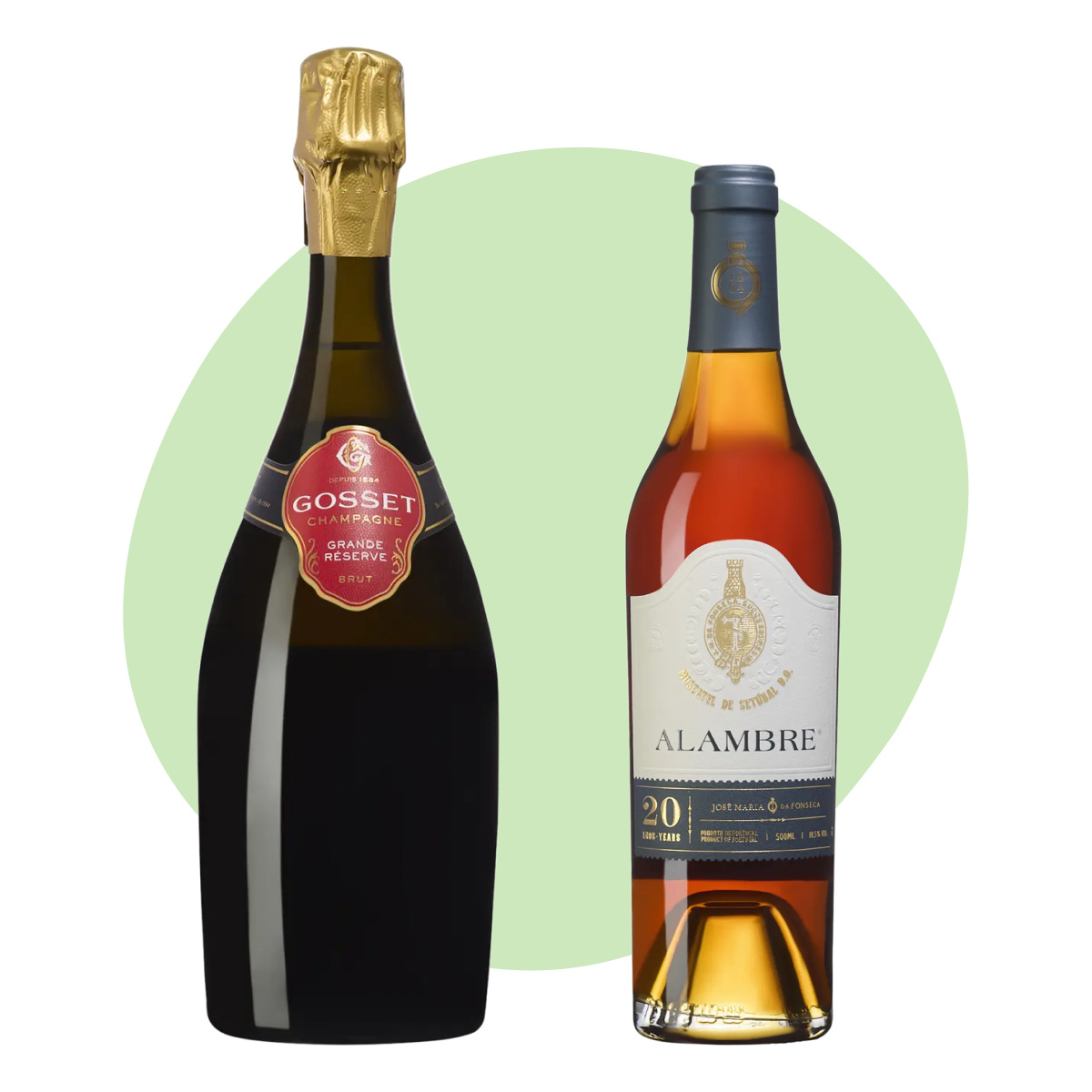
Gosset Grande Réserve Brut – #9539401 – 499:-
A favorite champagne of mine. Complex nose with loads of red apples and toastiness and beautiful, small, soft bubbles. This is a perfect wine to serve before dinner, and preferably paired with potato chips. 45% Chardonnay, 45% Pinot Noir and 10% Pinot Meunier.
Jose Maria da Fonseca Alambre 20 Years – #9589302 – 399:-
This is a BOLD wine. It’s blended from a bunch of different vintages, ranging back to 1911, and it shows. It’s an extremely dense wine, with notes of raisins, citrus and oak. It’s hard to explain how it tastes, so I highly recommend picking up a bottle to wow your friends. 100% Moscatel.
Enjoying these posts? If you share Barolo for lunch with few friends, you’ll get access to my 20 best wines under 300 SEK or a personalized wine pairing 😋
Nerd zone: Champagne fermentation
Champagne, or rather the champagne method of making wine, is pretty unique in the way that the wine undergoes two fermentations, to provide both the bubbles and the complexity that is the signature of these wines. The first fermentation, like in any still wine, transforms grape sugars into alcohol, creating a dry base wine. In the case of champagne, this is usually a very dry wine not really suitable for drinking. Several of these wines (from multiple vineyards, grapes and vintages) are then blended together into whatever the preferred style of the champagne house is.
Then it’s time for the second fermentation. At this point the “liqueur de tirage”, a mix of sugar and yeast, is added to the bottles which are then sealed again. This kicks of a second fermentation, which adds bubbles and once the fermentation is done the bottle is … just left there. For ages. The minimum requirement is 15 months for regular champagne, but some producers go way beyond this, 5-10 years is not uncommon. This patience is what makes champagne special and I for one is very thankful for this.